Son of DAT
The name started as a family joke. The DAT car of 1914 was built at the Kwaishinsha Motor Car Works in Tokyo and named, per Nissan's own history, for the initials of three backers: Den, Aoyama and Takeuchi. DAT built mostly trucks, because Japan had almost no private car market, and in 1926 it merged with Jitsuyo Jidosha of Osaka to form DAT Jidosha Seizo. In 1930 a government ordinance let cars of up to 500 cc be driven without a license, and DAT answered in 1931 with a 495 cc small car. It was called the Datson, the son of DAT. The name did not last. Son sounded like the Japanese word for loss, which Nissan translates as disadvantage, so it became sun, a nod to the flag as well.
Nissan takes the small car
The dates are where the sources part company. Nissan's corporate history says DAT Jidosha Seizo became a subsidiary of Yoshisuke Aikawa's Tobata Casting in 1931 and that the Datsun name arrived in 1932. A Nissan newsroom feature and Wikipedia put the change in 1933, after Nissan took control of DAT. Nothing consulted here settles it. The corporate sequence is not in doubt: Tobata Casting opened an automobile division in March 1933, and in June 1934 the business became Nissan Motor Co. From then on Nissan was the maker and Datsun was the car. The cars closely followed Austin designs, the Seven before the war and the Devon and Somerset after it. Production turned to military trucks from 1938 and passenger cars resumed in 1947. Wikipedia dates the first fully indigenous Datsun design to January 1955, the 110 sedan.
Mr. K goes to California
Datsun came to America almost by accident. Nissan's heritage collection records the Datsun 1000 sedan at the Imported Car Show in Los Angeles in January 1958, and says that showing, with a class win in Australia's Mobilgas Trial the same year, set off full-scale export to North America. The man who ran the Australian team was Yutaka Katayama, a former Nissan advertising manager and sports car enthusiast who had fallen out with management over the company union. Ate Up With Motor puts Nissan's US sales in 1958 at fewer than 100 cars. In 1960 Katayama was sent to California, which David Halberstam described in Esquire as a form of exile. That September Nissan set up its own distributor, Nissan Motor Corporation in U.S.A., with Katayama as vice president for the West and Soichi Kawazoe running the East. Katayama became president in 1965; one obituary calls him the first president, which other sources contradict. His running argument with Tokyo was about power. He wanted a 1,600 cc engine in the export 510 and got it through an ally on the board. He also kept the cars called Datsun, a name that in his view had come through the war cleaner than Nissan.
The cars Americans bought
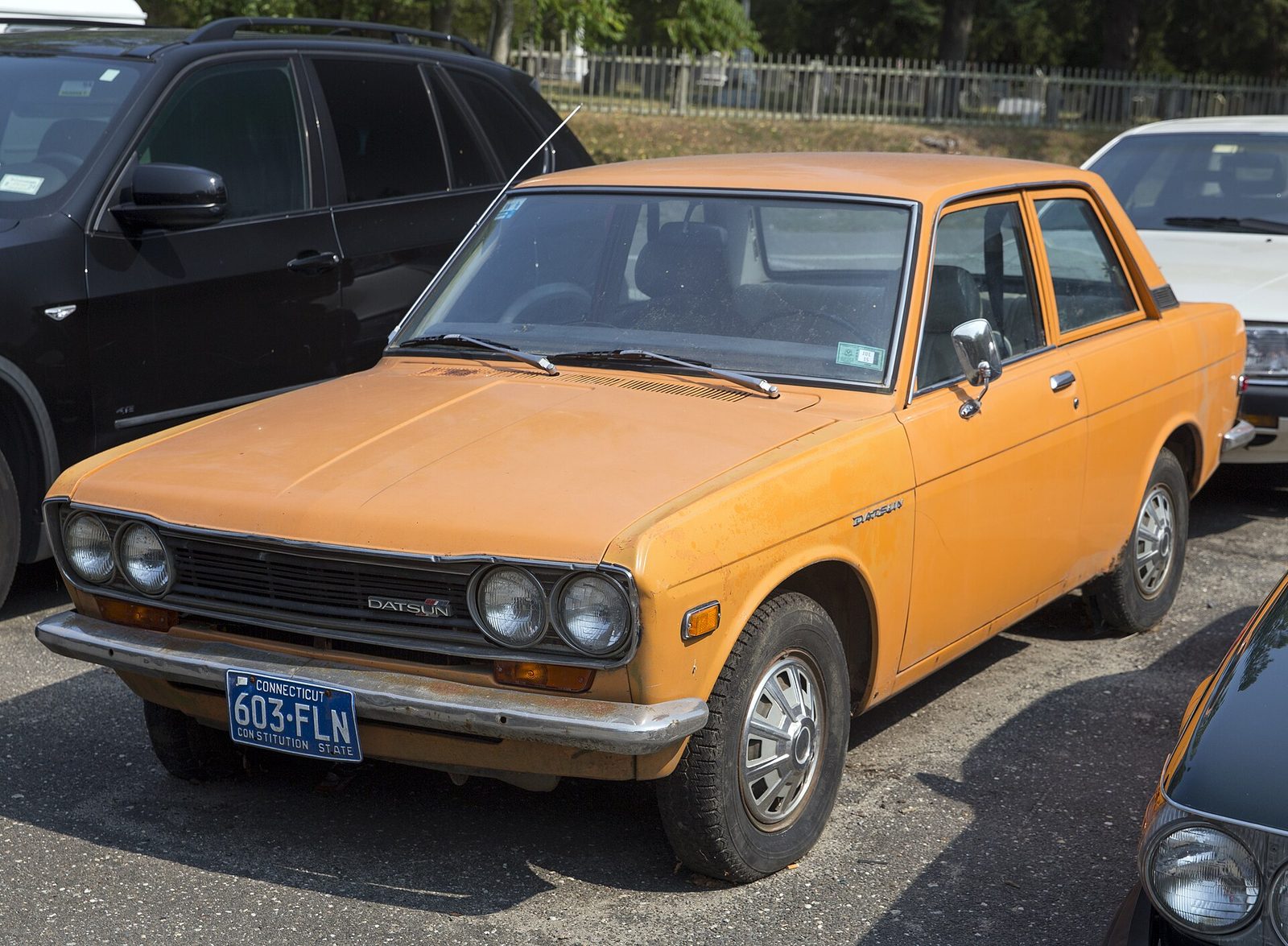
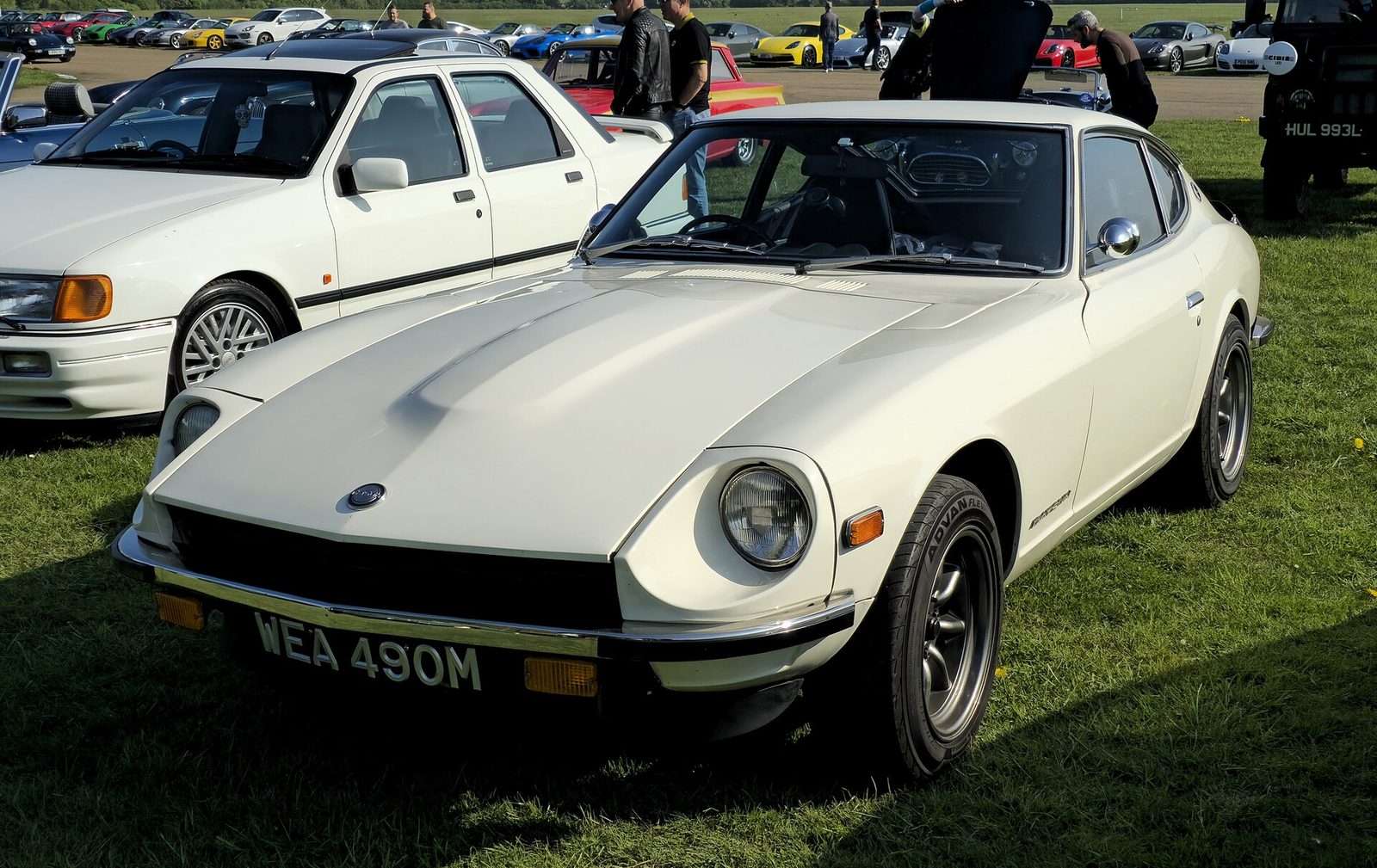
Trucks paid the bills. Hagerty credits the 520 pickup of 1965 with starting a decade of Datsun leadership in compact trucks, and the 620 carried that into the 1970s. The roadsters got the enthusiasts. Nissan dates full-scale export of the SPL212 Fairlady to North America to January 1960; the 1500, 1600 and 2000 followed, and Nissan calls the 1967 2000 the first Japanese car past 200 km/h. Brock Racing Enterprises raced them with Katayama's backing before moving on to the 510. The 510 of 1968, sold here as the Datsun 1600, gave Datsun a sedan the American press took seriously, and the 240Z followed, then the 260Z, 280Z and 280ZX. The 510, 240Z and 280Z have their own pages on this site. In 1972 a 240Z driven by Rauno Aaltonen and Jean Todt finished third at the Rallye Monte-Carlo. Katayama became chairman in 1975, handing the presidency to Hiroshi Majima, and went home in 1977.
Datsun becomes Nissan
In the autumn of 1981 Nissan announced that Datsun would become Nissan in the US, so that one name could be sold worldwide. When the change was complete is disputed. Fortune wrote in 2013 that 1981 was the year the brand vanished here. Wikipedia says new 1982 models such as the Sentra and Stanza wore Nissan while existing models kept Datsun through 1983, and that the brand was phased out in March 1986. The Truth About Cars says nearly every Nissan export to the US was a Datsun until 1986. For a few years dealer lots held cars badged Datsun, Nissan and Datsun by Nissan. Nissan revived the name in 2013 as a low-cost brand for India and other emerging markets and wound it down again by 2022; it was never sold in the US.