A cork factory that learned to build trucks
Mazda began on January 30, 1920, as Toyo Cork Kogyo, a cork-making factory in Hiroshima run by Jujiro Matsuda. The company became Toyo Kogyo in 1927 and moved into vehicles in 1931 with the Mazda-Go, a three-wheeled auto rickshaw truck. The name on the truck is usually explained as Ahura Mazda, a god of harmony and wisdom, which also happens to sit close to the founder's surname. Matsuda died in 1952. The first Mazda passenger car, the R360, did not arrive until 1960, followed by the Carol in 1962.
The company survived 1945 in better shape than its hometown. Toyo Kogyo's Hiroshima headquarters was heavily damaged in the atomic bombing, but the Fuchu plant, more than three miles from the center of the blast, was left relatively unscathed. That plant is where the company rebuilt, and it is still where Mazda builds cars.
The bet on the Wankel
By the end of the 1950s Toyo Kogyo was a small maker in a country where the government was openly talking about consolidating domestic automakers into three or four conglomerates. Tsuneji Matsuda, the company's president, concluded that Mazda needed a technology of its own to survive. When he heard about the rotary engine in late 1959, he decided it was exactly what the company needed. He visited NSU in Neckarsulm in October 1960, and Japan's trade ministry approved the license deal in mid-1961. NSU's license list shows Toyo Kogyo as the licensee for engines up to 200 PS, which is about 197 hp, from 1961.
Mazda then put 47 young engineers into a rotary research department headed by Kenichi Yamamoto. The hard problem was the one every Wankel licensee hit: the apex seals chattered and scored the rotor housing. Mazda's early production engines used aluminum-impregnated carbon apex seals. The result was the Cosmo Sport, shown on May 30, 1967, as the first mass-production car with a two-rotor engine. Fewer than six Series II cars were initially imported into the United States, so most Americans first met Mazda's rotary in something cheaper.
Arriving in America, then paying for it
Mazda formally entered the American market in 1970, and sold well. By the early 1970s the rotary was most of what Mazda sold here, and that was the trap. After the 1973-74 oil embargo, the Environmental Protection Agency published a report that slammed rotary cars as gas hogs. U.S. sales fell by about half over three years, and Mazda's net debt swelled to roughly 280 billion yen. A bailout from Sumitomo Bank is credited with keeping the company out of bankruptcy, and it came with three Sumitomo executives on the board.
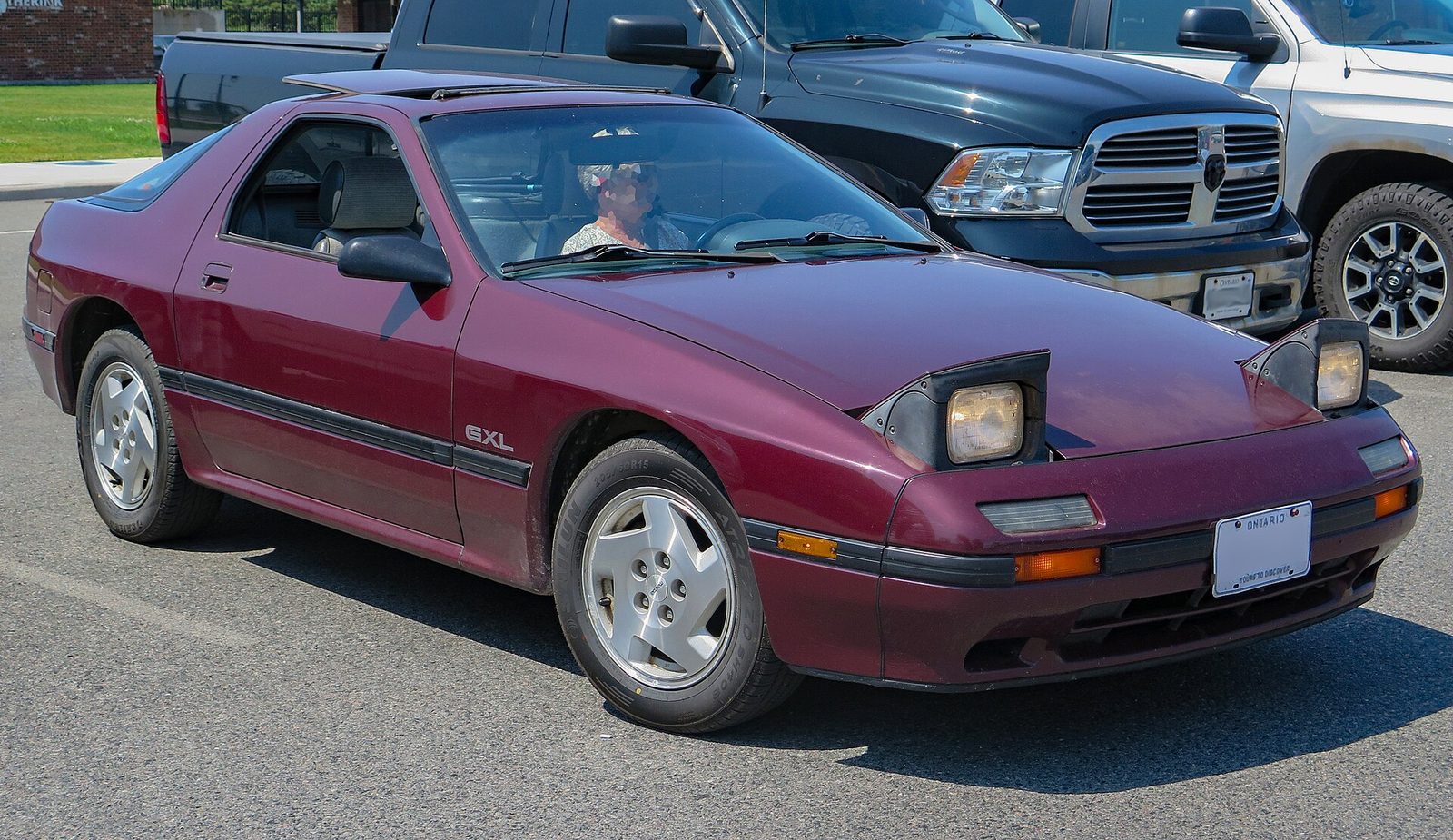
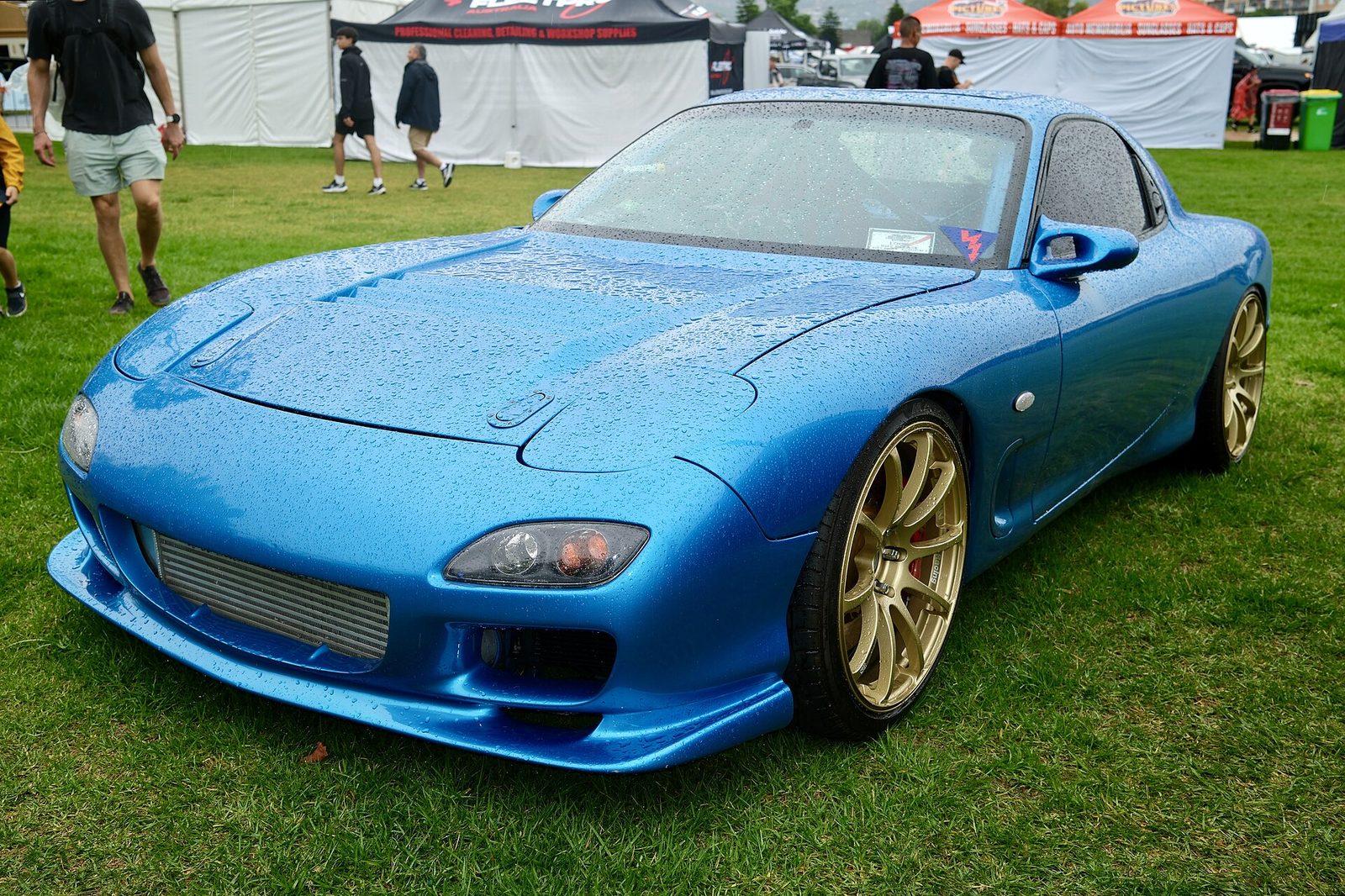
The company kept the rotary anyway, and by the end of the decade the sports car that carried it, the RX-7, was Mazda's way back into American showrooms. Ford, which already held a 7 percent stake, raised it to 24.5 percent starting in 1979. The RX-7 itself ran in three generations. The second, the FC, is the one most Americans mean when they say the car was a Porsche 944 alternative, and a convertible followed in the US in 1988. The third, the FD, came to the US for only 1993 through 1995 before slow sales ended it, and its sequential twin-turbocharged 13B-REW was the first of its kind to be exported from Japan in mass production.
The roadster that started in California
The Miata is an American idea that Mazda's Japanese engineers built. In 1976, Motor Trend writer Bob Hall met Kenichi Yamamoto, the same engineer who had led the rotary team, and was asked what car Mazda should build. Hall answered with a description of the simple British roadster that no longer existed. Hall later joined Mazda's California research and development organization as a product planner, and he hired designer Mark Jordan for the newly formed Mazda design studio in Southern California. Yamamoto, by then chairman, remembered the conversation and authorized research.
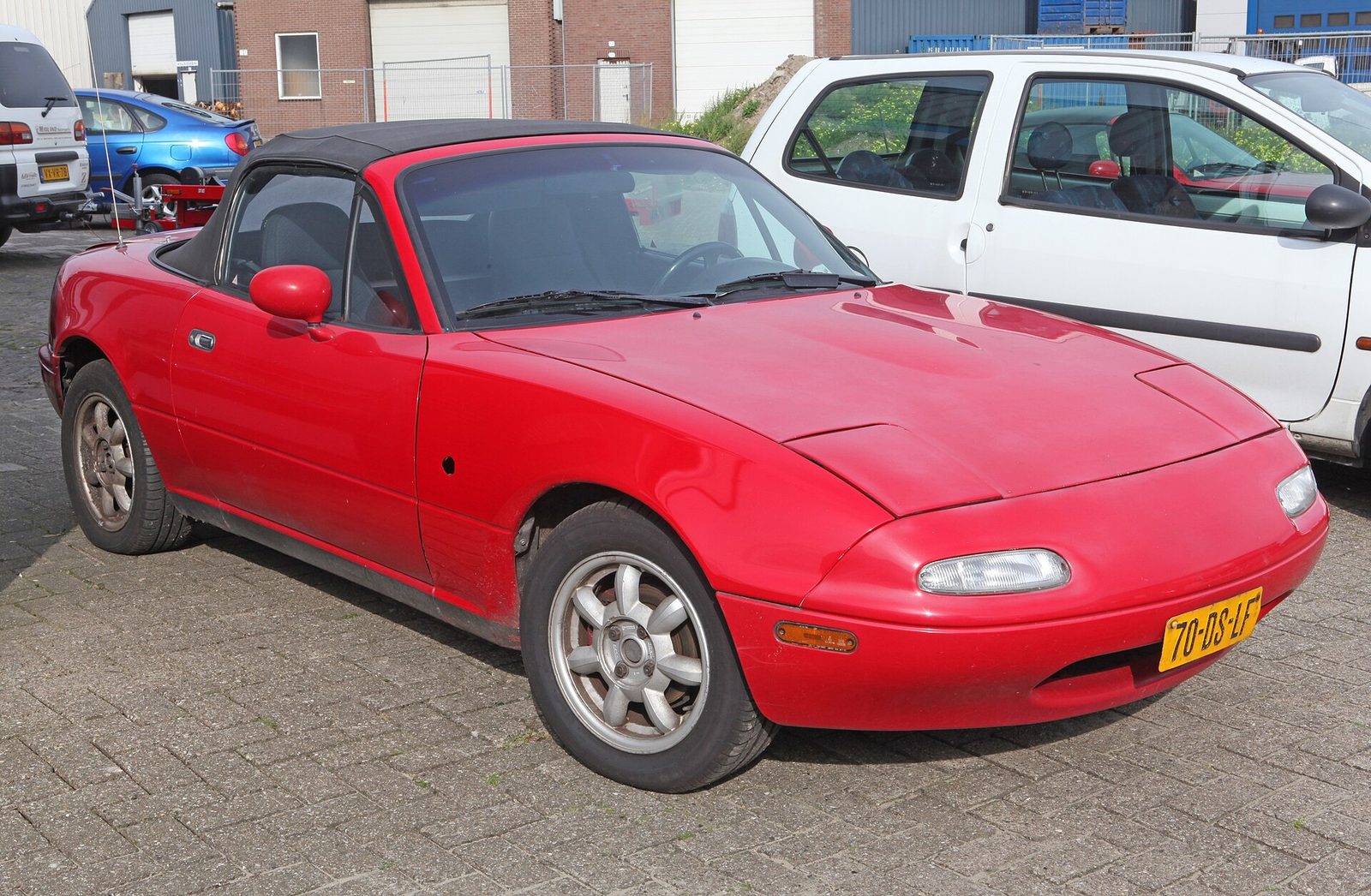
The program ran as an internal competition between Tokyo and California teams. The California entry, a front-engine, rear-wheel-drive design, won in August 1984 when full-scale clay models were presented. Jordan's exterior was sketched as a junior Ferrari, and Masao Yagi moved it toward the Lotus Elan. The MX-5 Miata appeared at the Chicago Auto Show in February 1989, and the NA car, the first generation, is the one with pop-up headlights. In 2000 the Guinness Book of World Records named the MX-5 the best-selling two-seat sports car in history.
Le Mans, and where Mazda sits now
Mazda's rotary racing program ended with the result no one can repeat. In 1991 a four-rotor Mazda 787B, the No. 55 car driven by Johnny Herbert, Volker Weidler and Bertrand Gachot, won the 24 Hours of Le Mans. It was the first win for a Japanese manufacturer, and it remains the only victory by a car without a reciprocating engine. The rules that let it race were already gone: Group C was replaced for the next season and rotary engines were no longer allowed.
Today Mazda is still the company that kept the Wankel in series production when everyone else stopped, and it still builds the Miata. The collector map is short and clear: the Cosmo Sport for the Japan-market rotary pioneers, the FC and FD RX-7 for the rotary cars, and the NA Miata for the car that made the roadster cheap again.