A driver who wanted to build his own
Vincenzo Lancia was a Fiat racing driver who started building cars under his own name in 1906, at age 25, while he was still racing Fiats. The company, Lancia & C. Fabbrica Automobili, was founded in Turin on 27 November 1906 with his friend and fellow Fiat driver Claudio Fogolin. The reason it matters to collectors is that the founder was an engineer first and a businessman a distant second, and the company behaved that way for the next half century. Vincenzo died in 1937, but the habit of building the cars properly and worrying about the bill afterward outlived him by decades.
The firsts
The Lambda of 1922 is the car to know. It had a unit body and independent front suspension, and its engine was a four-cylinder with a vee angle of only 13 degrees. More than 13,000 were built by 1931. That was a decade ahead of most of the industry on body structure, and Lancia kept the habit. The Aurelia of 1950 carried the first full-production V6, a 60 degree engine developed by Francesco de Virgilio under Vittorio Jano. Modified Aurelias took the first three places in the 1952 Targa Florio and an Aurelia finished second in the 1951 Mille Miglia. The Fulvia, introduced at Geneva in 1963, used a V4 so narrow, 12 degrees, that one cylinder head covered all the cylinders. The Flaminia, which has its own page on this site, came between the two, under a new engineering team led by Antonio Fessia.
Fame, little fortune
The engineering was expensive. Sports Car Market notes that the early-1950s racing program brought much fame and little fortune, and that Gianni Lancia and his mother sold the company to the industrialist Carlo Pesenti in 1955. Wikipedia gives 1956 for the Pesenti family taking control, and nothing consulted here reconciles the two. Fiat launched a takeover bid in October 1969, and Lancia accepted because it was losing significant sums. The first new model after that was the Beta of 1972. Curbside Classic puts the end of independence bluntly: Lancia had to succumb to Fiat's embrace by the end of 1969, as all Italian carmakers eventually do. The Beta was also the car that took Lancia back to America, which comes up below.
The rally years
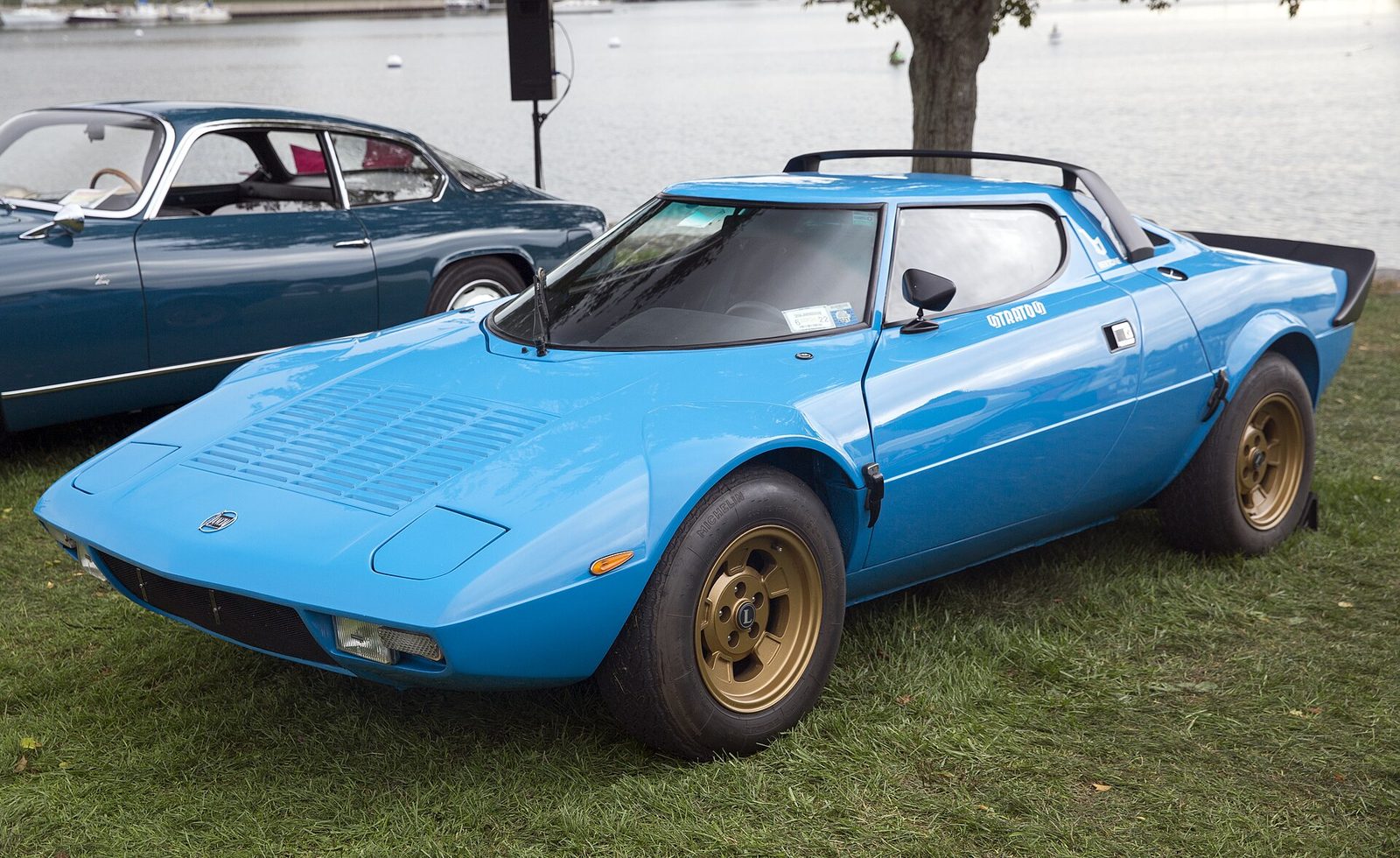
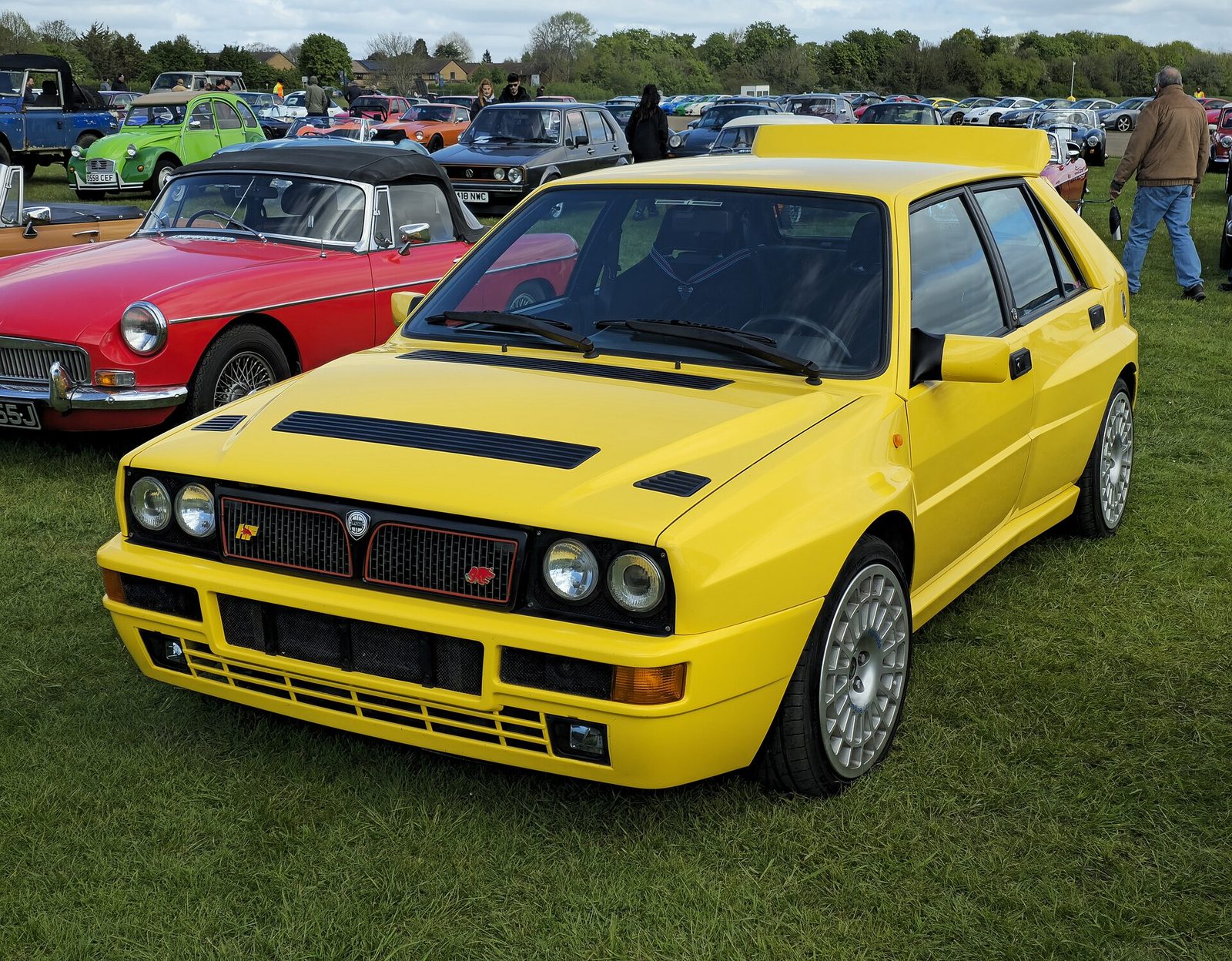
Fiat did not stop Lancia racing, it redirected it. The Fulvia won the International Championship for Manufacturers in 1972. The Stratos, a Bertone design by Marcello Gandini around a Ferrari Dino V6, won the world rally titles of 1974, 1975 and 1976, even though internal politics in the Fiat group had put rally responsibility on the Fiat 131 Abarth. Production of the 500 cars needed for Group 4 homologation began in 1973 and ended in 1975. The Stratos has a page on this site. The 037 of 1983 was largely designed by Abarth and took the constructors' title against the four-wheel-drive Audi quattro; it is the last rear-wheel-drive car to win it. The Delta that followed is the one most people mean when they say Lancia and rally. Group A rules required at least 5,000 production examples in 12 months, so the Delta had to be a real road car first. It won six consecutive manufacturers' championships from 1987 to 1992, a record that still stands, and the Delta HF Integrale has its own page here. The four-wheel-drive Delta HF was unveiled at the April 1986 Turin show, the Integrale followed in 1988, Juha Kankkunen and Miki Biasion won drivers' titles in it, and the Evoluzione arrived in 1991.
Where it stands
Delta production finished in 1994, and the 2010 Delta reached the UK and Ireland rebadged as a Chrysler, which is a quiet end for a name with this record. What is left for the collector is the old work: the Lambda, Aurelia, Flaminia, Fulvia, Stratos, 037 and Delta, each of which did something its competitors had not yet tried.