A state project with a long name
Volkswagen did not start as a car company in the usual sense. On 28 May 1937 the German Labour Front, an organization of the Nazi state, set up a Berlin company with the unwieldy name Gesellschaft zur Vorbereitung des Deutschen Volkswagens mbH, shortened to Gezuvor. Its job was to prepare a people's car. The design itself traces to Ferdinand Porsche, who received a development contract in June 1934 and had spent years trying to interest a manufacturer in a small family car. Construction of the factory began in May 1938 in a new town then called Stadt des KdF-Wagens, now Wolfsburg, and in September 1938 the company was renamed Volkswagenwerk GmbH. That is the origin: a state-owned factory, built for a car the state wanted, in a town built for the factory. Collectors who like the Beetle story tend to skip the first paragraph. It is part of the record.
The British restart
In August 1945 a young British Army officer, Major Ivan Hirst, was sent to Wolfsburg to take charge of what was left. What saved it was an order: on 22 August 1945 the British Military Government asked for 20,000 vehicles for the occupation administration, which gave the plant a reason to exist. The first civilian car left the factory on 27 December 1945. Ownership passed to the West German government on 6 September 1949, per Wikipedia. He later worked in the German section of the Foreign Office and then at the OEEC in Paris, and died in 2000. For a company that began as a political project, the first thing it produced as a business was a British Army contract.
Nordhoff and the one-model company
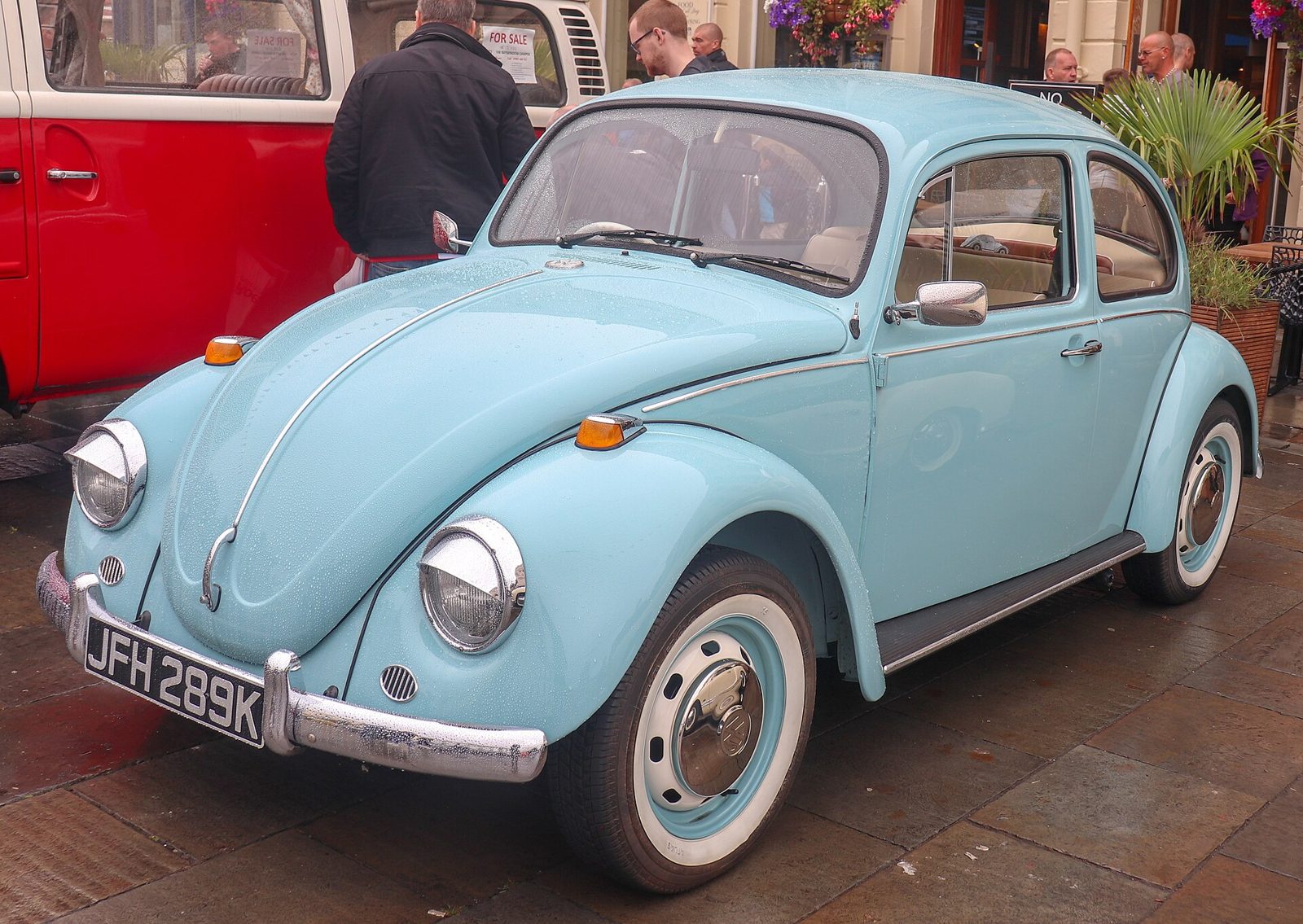
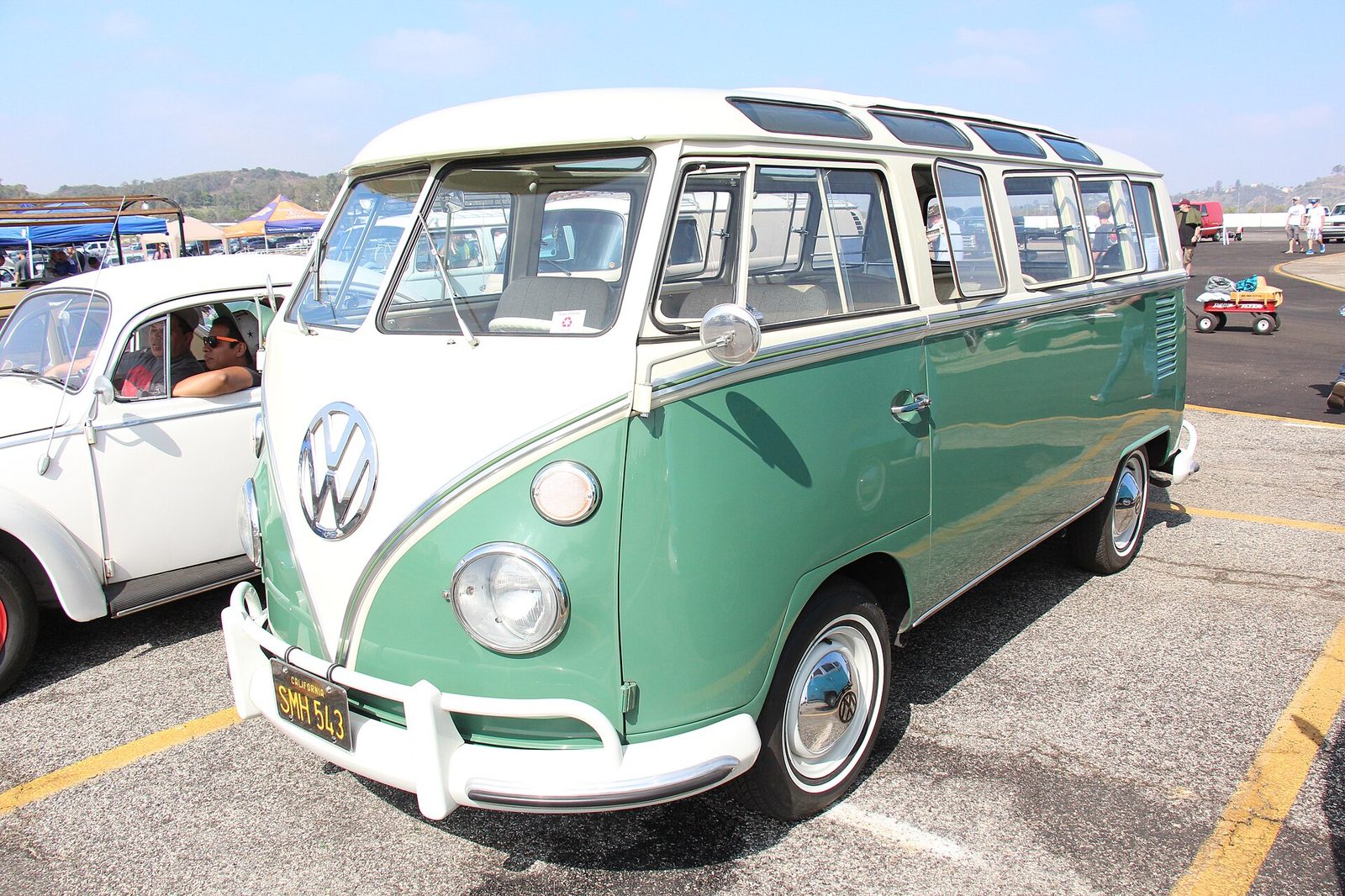
Heinrich Nordhoff took over as manager on 1 January 1948. He had worked at Opel from 1929, after General Motors bought it, and so knew American practice firsthand. The plant he inherited had risen from the ashes into a working car factory. His method was to keep the Beetle's shape and improve it constantly, a policy usually described as one model. The exceptions were deliberate: the Type 2 van, whose first sketch dates to a doodle of 23 April 1947 and which Nordhoff approved for production in May 1949, and the Karmann Ghia, shown in 1955 and built at Karmann in Osnabruck. Export markets and factories abroad followed. On 17 February 1972 the Beetle passed the Ford Model T as the highest-selling automobile of all time, and the last Type 1 was built in Puebla, Mexico, on 30 July 2003.
The Golf and the end of the Beetle era
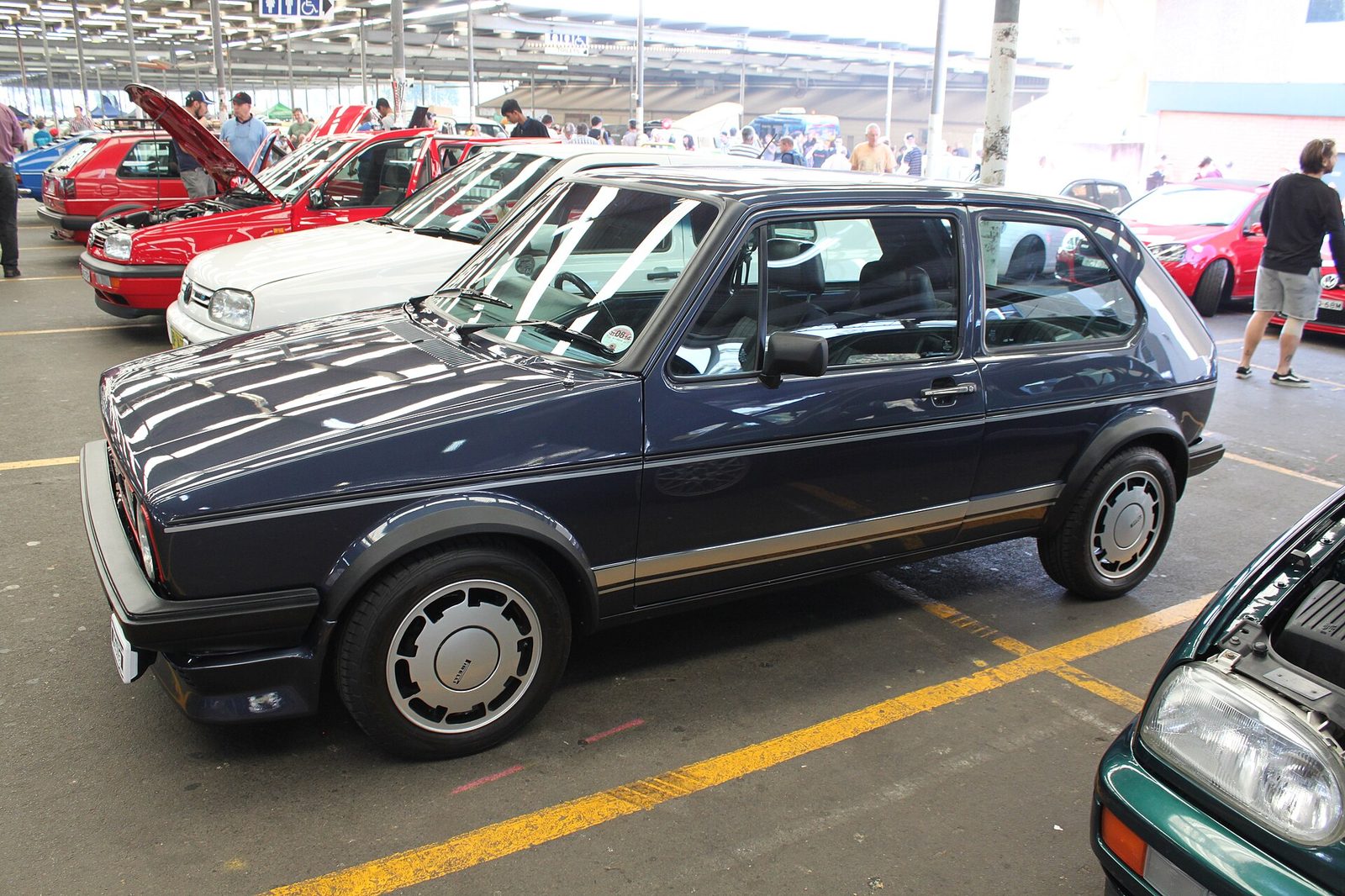
The Beetle's successor was the front-drive Golf, styled by Giorgetto Giugiaro's Italdesign and introduced in Europe in May 1974. In the United States and Canada it arrived that December as the Rabbit. The GTI version was shown at Frankfurt in September 1975 and reached European showrooms in September 1976. The American Rabbit GTI came later, for the 1983 model year, and it is the car that ties this marque's two halves together, because it was built in Pennsylvania. The Beetle, the bus and the Karmann Ghia have pages on this site, and so does the Mk1 Golf GTI in its US Rabbit GTI form.
Selling it in America
The sales story is in the inAmerica paragraph below, but one fact belongs here. The advertising that made Americans comfortable with a small, odd German car was not made in Wolfsburg. It was written and art-directed in New York, by Doyle Dane Bernbach, and it treated the car's faults as its charm. By 1960 more than half a million Beetles were on American roads.
Where it stands
Volkswagen closed its Pennsylvania plant in 1988 and the site later made televisions. The last Type 1 was built in Mexico in 2003. What remains for collectors is a set of cars with unusually well-documented origins, including the awkward ones. A 75th-anniversary trade piece describes the all-electric ID. Buzz as a homage to the Microbus.