Two companies and a girl's name
There was no Mercedes-Benz until 1926, and there was no one named Mercedes-Benz at all. Benz & Cie. was founded in 1883 by Carl Benz. Daimler-Motoren-Gesellschaft followed in 1890, founded by Gottlieb Daimler and Wilhelm Maybach. The two competed for decades, and on 28 June 1926 they formally merged and became Daimler-Benz AG.
The Mercedes half of the name came from the Daimler side, and from a customer. Emil Jellinek became one of the company's directors in 1900. He had been selling cars, mostly French makes, to aristocrats wintering in Nice, as the Austrian Consul General there. He ordered a small number of racing cars built to his specifications by Maybach, and the engine was named after his daughter. The company later registered Mercedes as the trademark for its entire automobile production. The name outlasted the man, the car and the company that first used it.
Grand Prix cars for the street
The postwar story that matters to collectors starts with racing. In 1952 Mercedes-Benz won the 24 Hours of Le Mans and the Carrera Panamericana, and the factory had a new problem: what to sell the people who had read about it. The answer came from outside Stuttgart. Max Hoffman, the company's US importer, suggested a toned-down Grand Prix car for affluent American enthusiasts, and he reportedly committed to buying 1,000 of them himself to get Mercedes to take the risk.
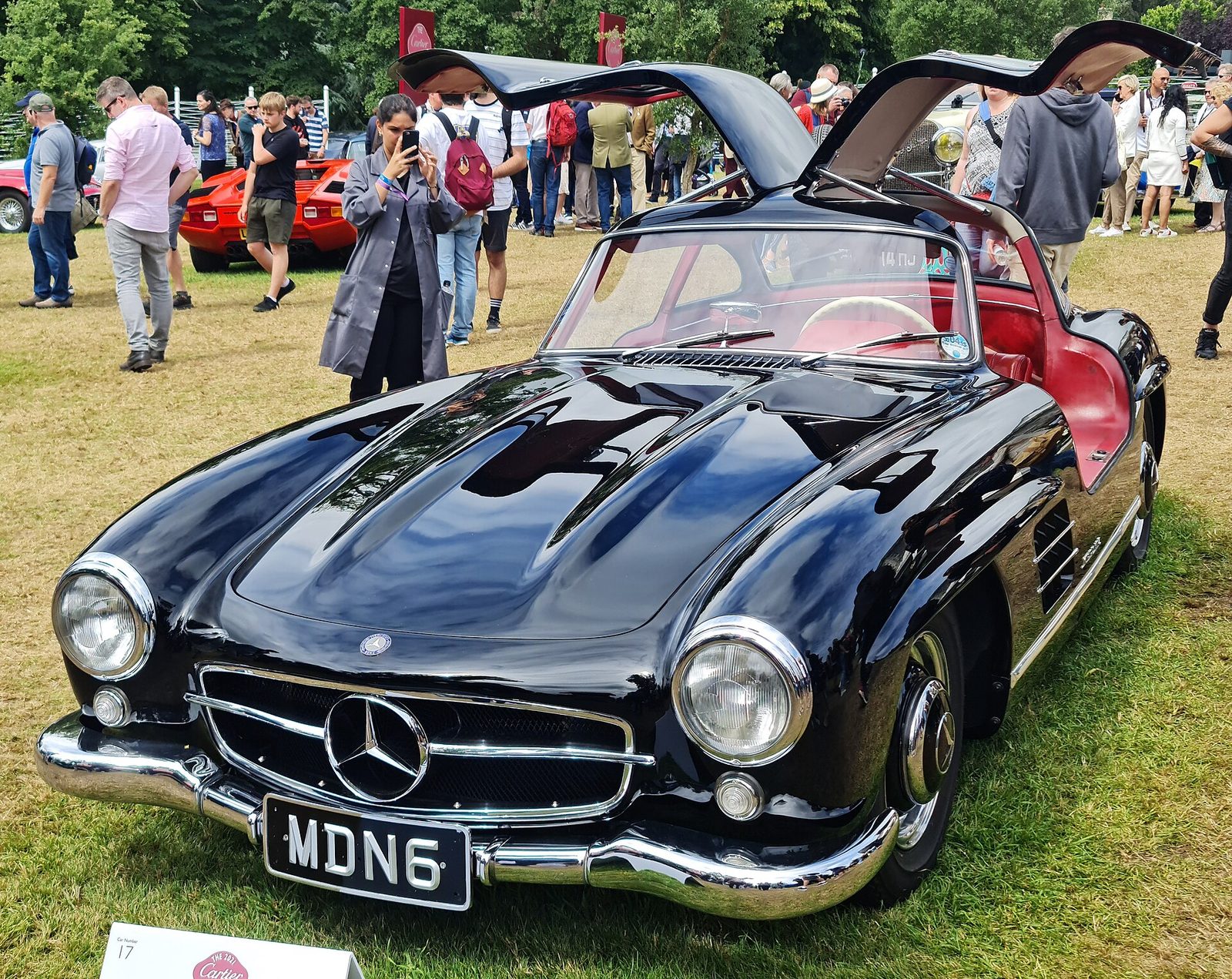
The result was the 300SL W198. It was shown at the February 1954 New York International Auto Show, before the cars had been introduced in Germany. The gullwing doors were not a styling choice. The tubular frame's upper rail sat level with the driver's elbow, which ruled out conventional hinged doors. Hoffman's bet paid: more than 80 percent of the 300SLs were sold in the US. The same show carried the 190SL roadster, the cheaper car that did the volume work.
The racing program itself was short. Fangio won the Formula One championship in 1954 and Fangio and Moss finished first and second in 1955. After the Le Mans crash of June 1955, which killed Pierre Levegh and more than 80 spectators, the team withdrew from motor sport at the end of the season.
The sixties and seventies: the cars Americans bought in numbers
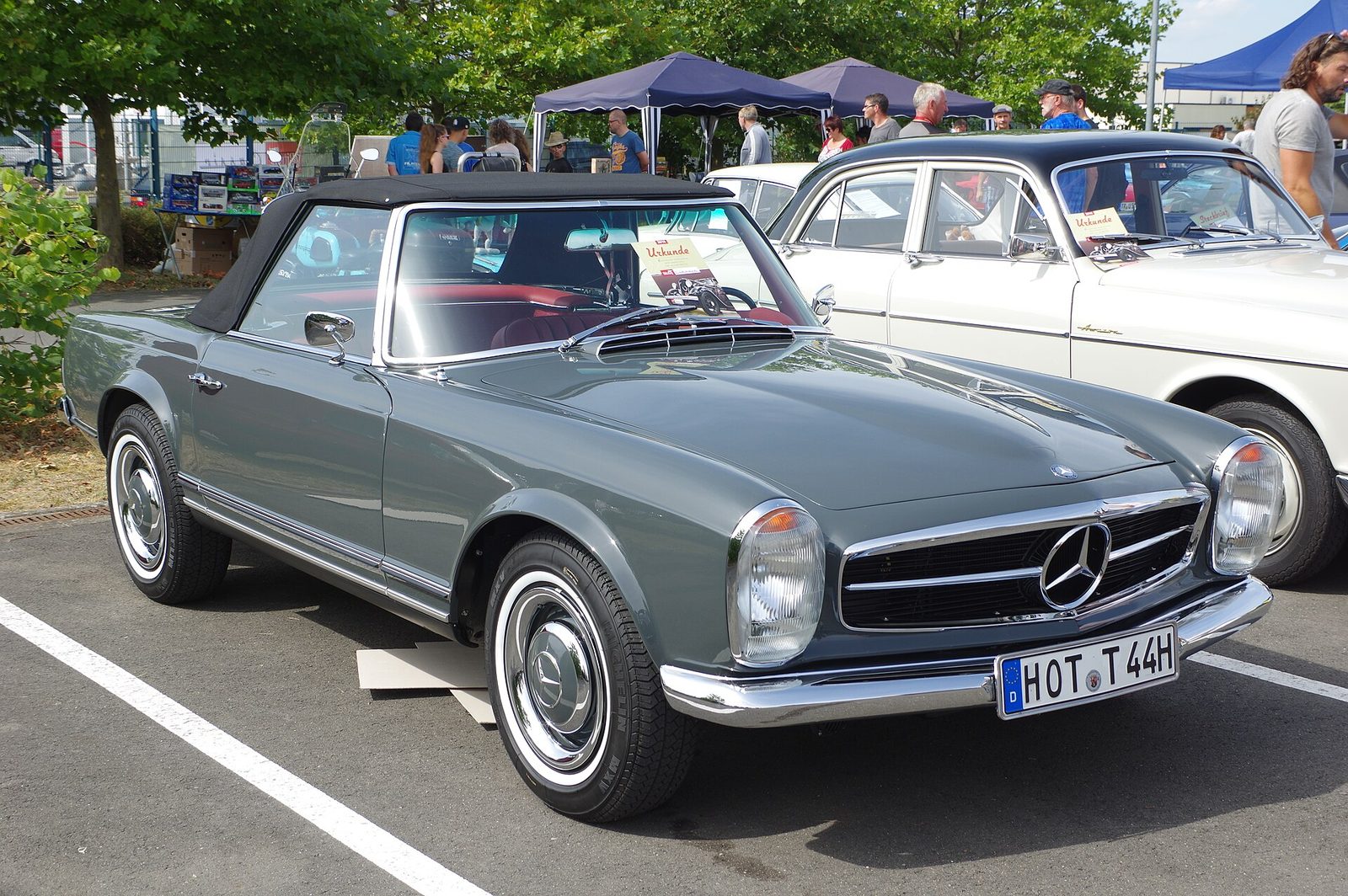
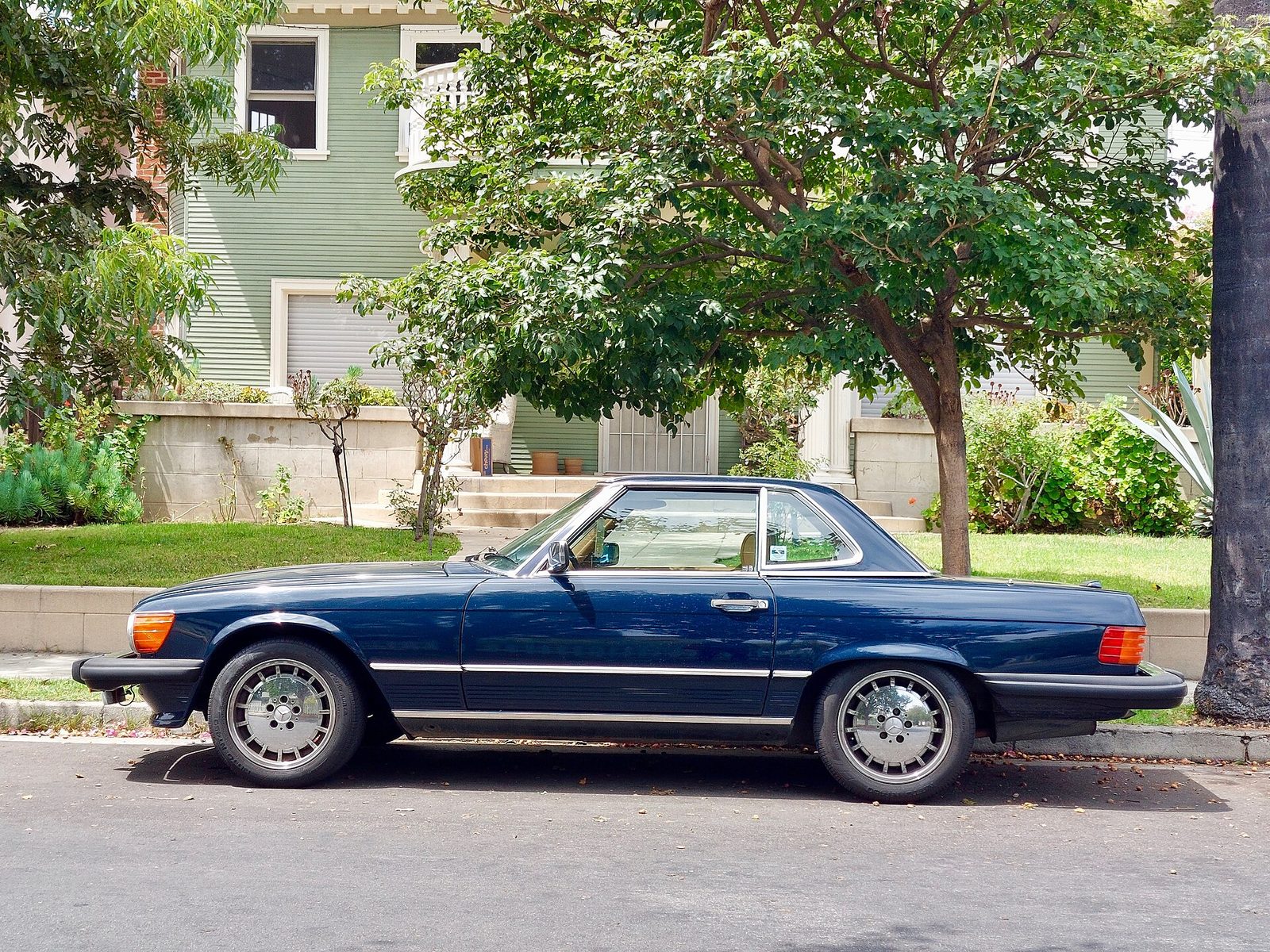
The SL Pagoda W113 ran from 1963 through 1971 as the 230SL, 250SL and 280SL, and its patented, slightly concave hardtop gave it the nickname. Of 48,912 built, 19,440 were sold in the US. Its successor, the SL R107, ran from 1971 to 1989 and sold 68 percent of its production here. Americans got the 350SL badge first, on what was really a 4.5 liter V8, then the 450SL, the 380SL and finally the 560SL, which was offered from 1986. Their bumpers grew by 8 inches at each end from 1974 to meet US rules.
The W123 sedan, built from 1975 to 1986, reached North America for the 1977 model year in 230, 240D, 300D and 280E forms. The 300D Turbodiesel followed in 1981. It is the Mercedes that many Americans mean when they say a Mercedes lasts forever, which is a reputation owners earned and the factory merely inherited.
The 190E and the competition-bred sedan
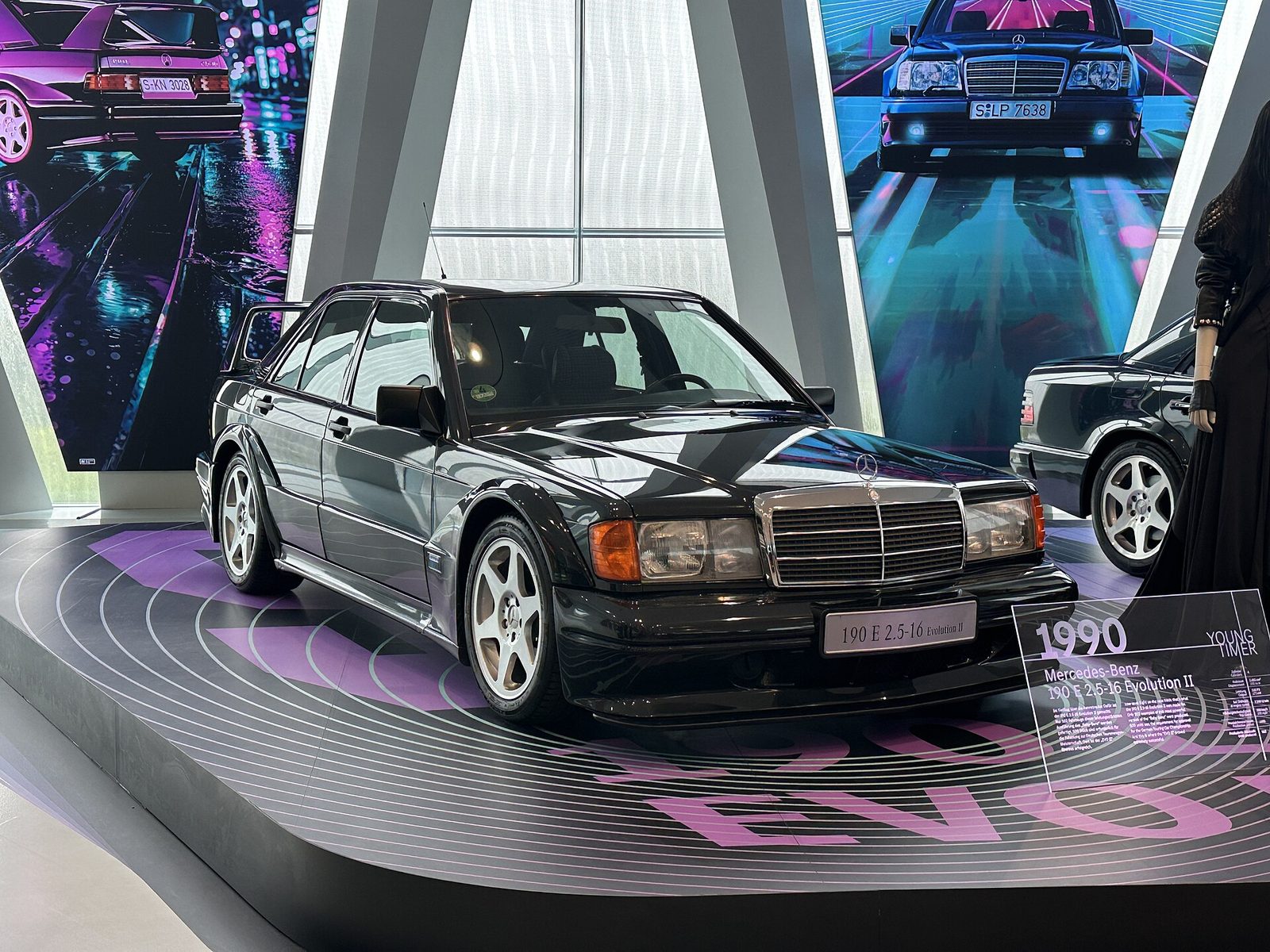
The 190E 2.3-16 is the odd one out. Mercedes wanted to take the compact 190E rallying and asked the British firm Cosworth to develop an engine of 320 hp for it. The car appeared at the 1983 Frankfurt show, and three cars set world endurance records at Nardo, Italy. Only 502 Evolution cars were built to homologate the car for DTM touring car racing. The road car, a small sedan with a racing cylinder head, is the clearest example of the company still spending racing money on a family model.
Today
The marque's collectible cars now fall into clear camps: the 300SL as the blue-chip postwar sports car, the Pagoda and R107 roadsters as the usable classics, and the W123 and 190E 2.3-16 as the cars younger buyers are discovering. The US importer is Mercedes-Benz USA, now headquartered in Sandy Springs, Georgia, after moving there from Montvale, New Jersey in 2015.